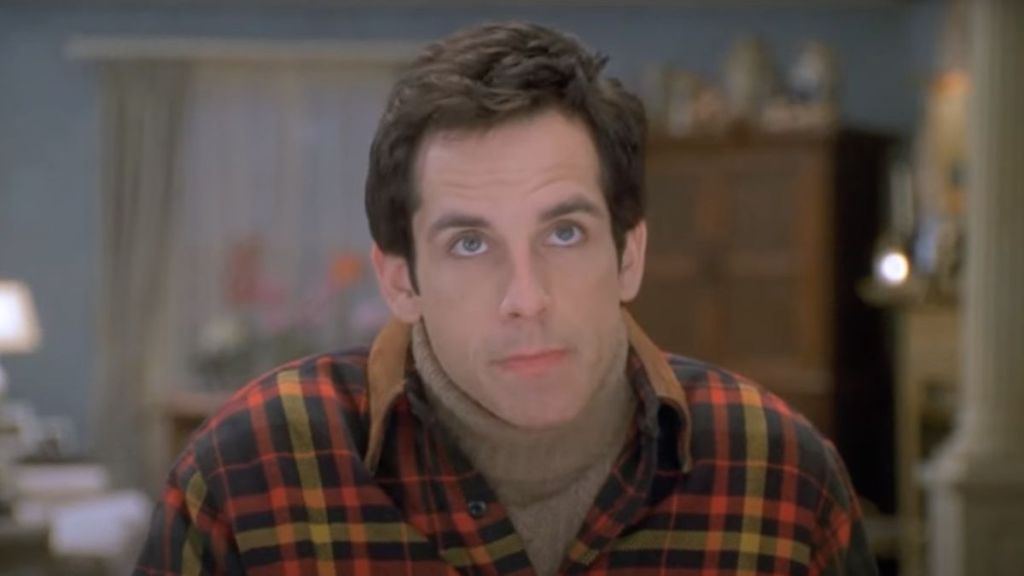
There’s a scene in Meet the Parents where Ben Stiller’s character, Greg Focker, loses his girlfriend’s father’s beloved cat.
It’s an accident.
But Greg is desperate to make a good impression on a man who already doesn’t trust him.
So instead of admitting what happened, he comes up with a plan.
He finds another cat, paints its tail to look like the missing one, and tries to pass it off as the family pet.
Naturally, it doesn’t work.
Now he’s not just the guy who lost the cat.
He’s the guy who lied about losing the cat.
And the harder he tries to make things right, the worse things become.
That’s pretty much the entire movie.
Greg isn’t a bad guy.
But he makes mistakes. Then he makes more mistakes trying to fix the first ones.
And eventually, even when he’s telling the truth, nobody believes him.
He’s become the villain in a story he never intended to be part of.
I’ve thought about that movie quite a bit lately.
Because there’s something about estrangement that can feel remarkably similar.
You say something you shouldn’t have said.
You get angry.
You raise your voice.
You react poorly to something that hurt you.
And maybe you really were wrong.
Maybe you owe an apology.
So you apologize.
But the apology is interpreted as an attempt to manipulate.
You try to explain what you meant.
Now you’re being defensive.
You try to reach out.
You’re violating a boundary.
You stop reaching out.
Apparently, you never cared.
And suddenly you’re Greg Focker, standing there with a cat whose tail you’ve painted, wondering how in the world things got this bad.
Every attempt to make things better has somehow become additional evidence that you’re the problem.
Now, there’s something important about Greg’s story.
He actually did things wrong.
He should have admitted he lost the cat.
He shouldn’t have lied.
He shouldn’t have tried to cover it up.
His good intentions didn’t make those decisions right.
And neither do mine.
I’ve said things I regret.
I’ve handled situations poorly.
I’ve allowed frustration to get the better of me.
And I don’t get to erase those mistakes simply by explaining that I was motivated by love.
Good intentions don’t excuse bad decisions.
But here’s where I struggle.
Does making a bad decision mean every subsequent decision must be interpreted through the worst possible lens?
Does one mistake establish your motives forever?
Can someone be genuinely sorry without having an ulterior motive?
Can an explanation be an explanation rather than an excuse?
Can an attempt at reconciliation simply be an attempt at reconciliation?
Or does the original mistake become the evidence used to convict you of everything that follows?
I think one of the most difficult things about estrangement is that you can find yourself defending against accusations you never imagined anyone would make.
Not because you believe you’ve done nothing wrong.
But because the intentions being assigned to your actions seem so foreign to the person you believe yourself to be.
You know what you meant.
They know how they experienced it.
And somewhere between those two things, a story develops.
A story in which you may have become someone you don’t recognize.
But there’s a danger here, too.
Just because I don’t recognize myself in someone else’s story doesn’t mean there’s nothing for me to learn from it.
Maybe they saw something I couldn’t.
Maybe my intentions were better than my behavior.
Maybe both things are true.
That’s a possibility I have to remain open to.
But I hope there’s room for another possibility, too: that someone can be wrong without being malicious.
The thing about Meet the Parents is that eventually the truth comes out.
Greg has to acknowledge his mistakes.
And the people judging him have to reconsider some of their assumptions.
That’s what makes the ending possible.
Not because Greg was innocent.
He wasn’t.
Not because everyone else was wrong.
They weren’t.
But because eventually they were willing to see more than the mistakes.
I wonder how many relationships get stuck because nobody can get past the original accusation.
One person keeps trying to prove they aren’t the villain.
The other keeps finding evidence that they are.
And every new interaction becomes another exhibit in a trial that never seems to end.
I don’t need my son to believe I’ve never done anything wrong.
I know better.
I don’t need him to agree with every decision I’ve made.
And I certainly don’t expect good intentions to erase the consequences of my mistakes.
But I hope someday there’s room for him to consider that the person who hurt him may not have been trying to hurt him.
That a father can love his son and still get things wrong.
That an apology might simply mean he’s sorry.
And that wanting another chance doesn’t necessarily mean he’s trying to manipulate his way into one.
Because sometimes we’re guilty of the things we did.
But not necessarily guilty of the person we’ve been accused of being.
And I think there’s a difference worth remembering.


Leave a Reply